2025-2026 Student Achievement Plan Highlights

We are pleased to present highlights from our 2025-2026 Student Achievement Plan priority areas. We have included the goals for each priority, along with an overview of the strategies and actions taken throughout the year. We invite you to learn more about how the DCDSB has supported faith & wellbeing, advanced human rights & equity and improved student learning in the 2025-2026 school year.

Achievement of Learning Outcomes in Core Academic Skills

View the following highlights of initiatives and programming related to our goals:

Goal: Improve students' literacy learning and achievement

The DCDSB Literacy Intervention Team is partnering with kindergarten educators to improve student reading achievement. This prevention-focused approach helps strengthen foundational literacy skills in the early years and sets students up for long-term success.

Intervention teachers are currently working in seven schools and will expand to support twenty-four schools by the end of the 2025–2026 school year. Their work focuses on strengthening classroom instruction by helping Kindergarten educators deliver explicit and systematic lessons using an adapted UFLI Foundations routine and supporting small group learning with evidence-based strategies that reinforce skills and build reading fluency in Year 1 and Year 2 students.

By working alongside classroom educators and providing targeted support, the Literacy Intervention Team is ensuring every child has the opportunity to develop strong reading skills from the very start.

During the 2025-2026 school year, elementary French Immersion classrooms are implementing a newly developed French Immersion Early Literacy Diagnostic, Son‑au‑graphe, helping primary teachers form precise, target‑focused groupings and respond more effectively to student needs.

The use of the Son‑au‑graphe program has increased across French primary classrooms, with educators reporting noticeable improvements in decoding, phonological awareness, and early reading confidence.

Educators are also using beginning‑of‑year screening data to plan outcome‑based instruction, resulting in clearer goals, earlier intervention, and more consistent growth for students.

We look forward to continuing to strengthen the confidence in French literacy proficiency in young learners and across all French Immersion classrooms in the DCDSB. 

This year, literacy learning in the Junior and Intermediate grades has been strengthened through a collaborative professional learning session developed jointly by Student Services and Academic Services. Junior and Intermediate educators were invited to engage in focused learning designed to deepen their understanding of how to support students with foundational literacy gaps. Participation was strong, with 30 educators attending in the fall and an additional 30 educators participating in early December.

The sessions focused on building educator capacity in key areas, including the use of diagnostic assessment to identify student needs, the development of clear and targeted foundational literacy IEP goals, and programming for students using Lexia resources. Educators also explored the intentional use of Assistive Technology, emphasizing how these tools can reduce barriers while supporting skill acquisition and independence.

As part of DCDSB's ongoing efforts to strengthen home-school connections in French Immersion, we’ve launched a series of French Immersion Primary Parent Literacy Nights for families with students in Grades 1 to 3. These evenings are designed to build parent understanding of how children learn to read, the recent shifts in literacy instruction, and how families can support literacy development at home—regardless of the language spoken. To date, this presentation has taken place at three schools, (St. Monica, St. Mark the Evangelist, and St. Leo) with four additional sessions scheduled in the coming weeks. 
 
Each session includes a presentation covering:
  • The evolution of literacy instruction over the past five years in Ontario
  • How students learn to read through structured literacy approaches
  • The unique application of structured literacy in French Immersion
  • The transferability of reading skills between languages
  • Practical strategies for supporting literacy at home
Parents receive take-home kits filled with tools and ideas to reinforce reading skills. Following the presentation, they rotate through eight interactive stations led by educators, where they learn strategies such as blending and segmenting sounds, using sound boxes, reading aloud, building vocabulary, and supporting fluency.
A key message throughout is that parents do not need to speak French to support their child’s literacy development. Research shows that foundational reading skills practiced in a home language can transfer to French learning in the classroom—and vice versa.
 
The response from families has been overwhelmingly positive, and we look forward to continuing this initiative across additional school communities.
french immersion parent night presentation

Next Steps

  • Provide job-embedded coaching and professional development to Kindergarten educators on the use of University of Florida Literacy Institute (UFLI) program to support tiered reading instruction and intervention.
  • Facilitate and build capacity surrounding the school improvement process with administrators using a standardized template.
  • Provide ongoing professional learning, through Kindergarten, Junior and Intermediate literacy leads and Program Support Teachers, on evidence-based reading interventions aligned with the Science of Reading.
  • Provide resources and professional learning to support digital literacy, including responsible student use of artificial intelligence.

Goal: Improve students' math learning and achievement

In alignment with the Ministry of Education’s Math Achievement Action Plan and the Durham Catholic District School Board’s Student Achievement Plan, the Board’s Math Achievement Action Plan outlines mathematics professional learning opportunities, provides support to Ministry-identified priority schools, and delivers resources for classroom teachers to support mathematics programming. 

2025-2026 Math Achievement Plan

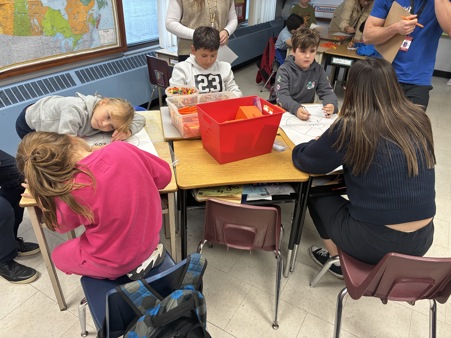
On November 18, DCDSB Math Hub professional learning sessions took place at Sir Albert Love Catholic School in Oshawa and St. Matthew the Evangelist Catholic School in Whitby.

Grade 6 Math Hub: Teachers and principals from St. Hedwig and St. Christopher gathered at St. Matthew.

Grade 3 Math Hub: Educators from St. Thomas Aquinas and Monsignor Philip Coffey met at Sir Albert Love.

Participants explored high-impact instructional practices in mathematics, visited classrooms to observe small group instruction, and engaged students in math games and cooperative activities.

As a next step, teachers will begin incorporating small group instruction into their own classrooms. The next Math Hub session is scheduled for February 2026.

student working on math together

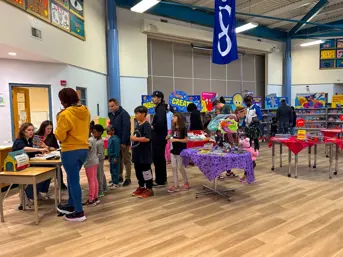
St. Mark the Evangelist Catholic School had a wonderful Math & Literacy Night during Catholic Education Week!

A heartfelt thank you to all the St. Mark the Evangelist C.S. families who came out to participate and support student learning. We were thrilled with the wonderful turnout and the excitement seen throughout the school as families explored engaging literacy and numeracy activities together.

From reading and word games to hands-on math challenges and problem-solving activities, it was wonderful to share simple and meaningful strategies that can continue at home to support learning in fun and interactive ways.

Thank you to the amazing staff at St. Mark the Evangelist C.S. for their time, creativity, and dedication in preparing such engaging experiences for our students and families. Most importantly, thank you to our students for bringing their energy, smiles, and enthusiasm to the evening!

Together, we continue to strengthen the connection between home, school, and faith-filled learning.

family math night

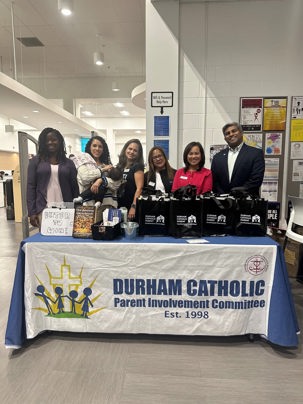
On Tuesday, March 10, 2026, the Durham Catholic District School Board, in partnership with the Durham Catholic Parent Involvement Committee (DCPIC),  hosted a virtual financial literacy parent night. Families were invited to discover practical strategies for budgeting, saving, and making informed financial decisions while learning how to reinforce key concepts your child is studying in school, such as consumer awareness, responsible money management, and economic understanding.


Next Steps

  • Increase educator and administrator understanding of the High Impact Instructional Practices Mathematics document.
  • Provide targeted professional learning for administrators, educators, and school communities to support students with special education needs in mathematics.
  • Support implementation of MathUP Student as a digital tool to enhance math learning.

Preparation of Students for Future Success

Goal: Improve graduation rates and preparedness for future success

On Thursday, April 16, the Project SEARCH Lakeridge Gardens Interns spent an engaging day exploring career opportunities in the local community! Interns visited Hilton Garden Inn Ajax, the Durham Convention Centre, Boston Pizza Ajax, and Crock‑a‑Doodle Ajax.

Team members at the Hilton Garden Inn generously shared their knowledge of the hotel and hospitality industry and took them on a tour, while the team at the Durham Convention Centre provided a behind‑the‑scenes look at roles that support events, guest services, and operations. At Crock‑a‑Doodle Ajax, interns enjoyed a tour of the studio and learned how creativity, customer service, and teamwork come together in a welcoming workplace.

The visit to Boston Pizza Ajax was a highlight, as staff impressed the group with their kindness, and the opportunity to hear from a former intern who is now in a manager position on her positive career journey.

Thank you to these local businesses for welcoming our interns and for supporting inclusive, meaningful employment opportunities in our community.

project search interns

This spring, the Welding Development Program will be came to its conclusion. This initiative was delivered in partnership with Durham Catholic District School Board and the Tomorrow’s Trades Program, and provided twelve Grade 12 students from across the board with the opportunity to participate in after-school welding workshops.

Throughout the program, students developed essential employability skills, learned how to apply to a union, and received hands-on technical training from industry leaders. Instruction focused on mastering a range of welding techniques, including horizontal, flat, vertical, overhead, outside pipe, and inside pipe welding.

The program was designed to support students interested in pursuing a post-secondary pathway in the welding skilled trades by equipping them with both soft skills and technical expertise, as well as the opportunity to earn welding and safety certifications. Upon successful completion of the program, students will receive a $1,200 bursary to support their transition into the skilled trades.

Grade 11 and 12 students in our Specialist High Skills Major (SHSM) programs recently stepped out of the classroom and into exciting hands-on learning during Sector-Partner Experience Days with local community partners.

Health and Wellness SHSM students from Monsignor John Pereyma Catholic Secondary School visited the Lakeridge Health Foundation for an inspiring day. They tackled a creative challenge to boost awareness and participation among young donors, explored career opportunities in the non-profit sector, and wrapped up with a behind-the-scenes hospital tour showcasing areas transformed by donor generosity.

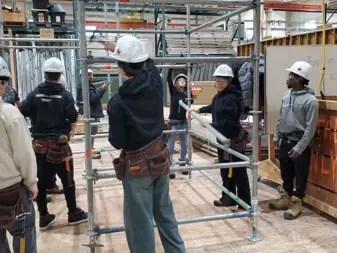
Meanwhile, St. Mary Catholic Secondary School students in the Transportation SHSM headed to the College of Carpenters and Allied Trades Inc. Their day included building a scaffold in a hands-on challenge, touring state-of-the-art facilities, learning about apprenticeship pathways, and earning an official scaffold certification - a valuable step toward future careers in skilled trades!

SHSM is a specialized high school that allows students to earn their Ontario Secondary School Diploma while focusing on a specific economic sector. Contact your school’s Guidance Department to learn more about the SHSM programs available to you.

shsm

Next Steps

  • Expand community partnerships and opportunities for Project SEARCH student interns to support enhanced employability post-graduation.
  • Diversify learning opportunities with community partners and experiences connected to secondary curriculum.
  • Streamline transition process from Grade 8 to Grade 9.
  • Continue to support Specialist High Skills Major (SHSM), Ontario Youth Apprenticeship Program (OYAP), Cooperative Education and Dual Credit programming through promotion of these specialized pathways and engagement of community partners.

Faith Formation, Student Engagement and Well-Being

DCDSB Goal: Develop and strengthen Catholic identity through a focus on the five key elements of Catholic schools (Catholic Environment, Catholic Community, Catholic Curriculum, Catholic Social Teaching and Staff Formation)

Our Catholic schools provide a faith based education rooted in the Gospel message of Jesus Christ. We challenge each student to meet Ontario's Catholic Graduate Expectations by promoting their spiritual development with an emphasis on social justice and Catholic Social Teachings. We believe that this formation will not only serve our students today, but also in the future as they contribute positively to our society in the service of others.

Each year we identify an essential element of evangelization, through a spiritual theme, to focus our faith formation initiatives. 

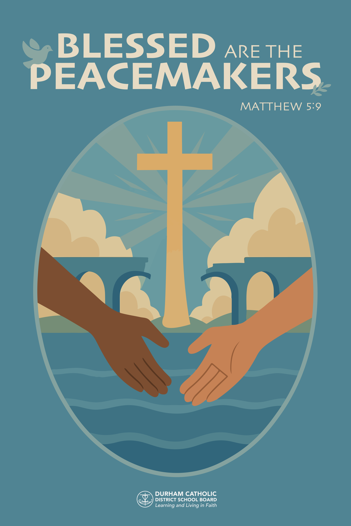
Blessed are the Peacemakers (2025-2026)

On May 8, 2025, Pope Leo XIV greeted the city of Rome and the world with these words at his first appearance as the Successor of Peter from the Central Loggia of St. Peter’s Basilica:

“Peace be with you all! Dear brothers and sisters, these are the first words spoken by the risen Christ, the Good Shepherd who laid down his life for God’s flock. I would like this greeting of peace to resound in your hearts, in your families, among all people, wherever they may be, in every nation and throughout the world. Peace be with you! It is the peace of the risen Christ. A peace that is unarmed and disarming, humble and persevering. A peace that comes from God, the God who loves us all, unconditionally.”

Inspired by Pope Leo’s invocation of peace, and his prayer that “one and all” may be helped “to build bridges through dialogue and encounter, joining together as one people, always at peace,” the DCDSB community will be guided by the spiritual theme of Blessed are the Peacemakers (Matthew 5:9) for the 2025-2026 school year.

Learn more about our spiritual theme and the poster design.

spiritual theme: Blessed are the peacemakers


Celebrating Faith in Action - The Durham Catholic District School Board (DCDSB) proudly launched the People of Peace recognition program at the beginning of the szchool year, a initiative that brought to life our 2025-2026 Spiritual Theme: Blessed are the Peacemakers. Each month, we honoured one student and one staff member who exemplify the spirit of peacemaking – those who actively build bridges, foster understanding, and reflect God’s love in their daily lives. These individuals are peacemakers who inspire others through their commitment to creating more just and compassionate communities.

The selected nominees were recognized at the monthly Board Meeting for a special award presentation, and will also be featured in the DCDSB News, board/school websites, and DCDSB social media.

Learn more about the program and the recipients.

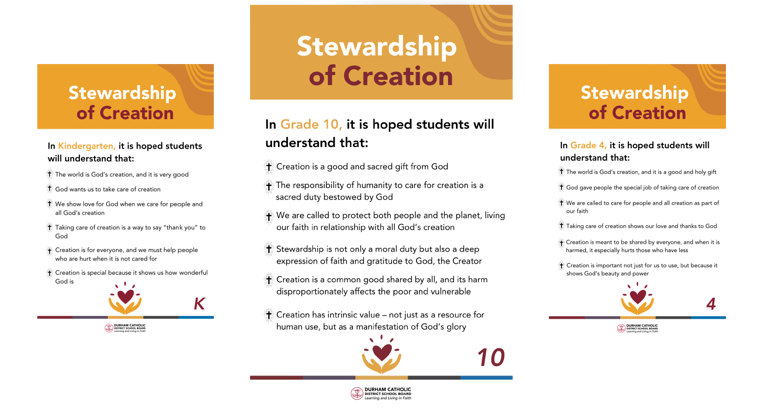
The 2025–2026 strategy focused on establishing a Catholic Social Teaching framework and supporting its integration into teaching and learning to ensure a Catholic perspective across curriculum and practice. Find more information in section 2.3.2. of the April 27, 2026 Board Meeting report.

catholic social teaching posters example

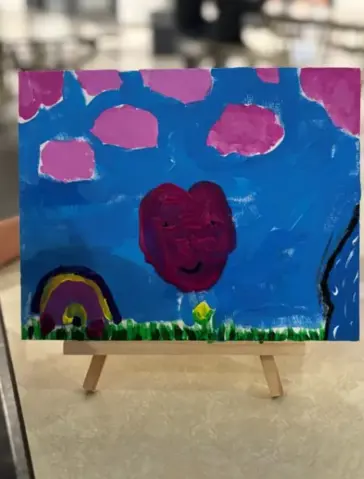
On Wednesday, May 6, DCDSB hosted families at All Saints Catholic Secondary School for a special live author event with Karen Kiefer. Karen Kiefer is the author of many children's books, including Drawing God and Growing God. Karen has visited various DCDSB schools to share her stories.

The evening began with a presentation on the imagination, led by Karen. After the brief presentation, Karen did a reading of her book, Drawing God. After the reading, each child present received art supplies, including a mini easel, a small canvas, brushes, and their choice of paint colours on a palette. They were all encouraged to draw God according to their imagination. 

The event was a meaningful celebration of creativity, faith, and community, inspiring students and families alike to reflect on their own unique perspectives. Through storytelling and art, Karen Kiefer encouraged participants to explore imagination as a way of expressing their understanding of God, leaving everyone with both a memorable experience and a lasting reminder of the power of creativity.

Drawing god event student painting

Next Steps

  • Strengthen visible expressions of faith and welcome across schools and board spaces, including reflection on the symbolic elements of the spiritual theme poster.
  • Deepen parish-school collaboration through seasonal Listening and Learning Gatherings, with a shared focus on sacramental preparation.
  • Support all staff in the use of the DCDSB Catholic Social Teaching Framework across curriculum and daily practice.
  • Support educators in the effective use of new resources, including Blessed and Beloved (Family Life Education) and Growing in Faith, Growing in Christ (Religious Education).
  • Support formation of new teachers with a focus on understanding Catholic education as a vocation rooted in faith and service.

Goal: Improve students' participation in class and learning

Supporting student attendance continues to be a focus at the Durham Catholic District School Board (DCDSB) this school year. In September, school administrators were in-serviced on the updates to the Ministry of Education’s Enrollment Register Instructions for Elementary and Secondary Schools for 2025-2026 to reinforce compliance requirements and highlight changes around Ministry expectations for attendance record keeping and consecutive absences.

During this in-service, the principal and vice-principal group was oriented to a series of slides that could be used with staff to highlight preventative measures as well as attendance interventions, using a trauma-informed tiered model of intervention. There was an emphasis on improving student attendance by understanding and addressing barriers through non‑judgmental, relationship‑based support and collaboration among school staff, students, and families to help students feel welcomed, valued, and experience success at school. 

In April 2026, supporting student attendance was a focus for school administrators who were in-serviced on trauma-informed approaches to addressing the root causes for higher absentee rates for individual students. Recognizing that attendance issues are often multi-faceted and complex, a supportive, early approach is often needed.

Administrators were shown how to run a chronic absenteeism report for their school and were given time to build on the knowledge gained from the previous session and review their own data, looking for anomalies, patterns and gaps. Administrators were encouraged to discuss best practices with other school leaders to determine a trauma-informed approach to addressing attendance needs in their schools.

A recent survey of School Social Workers/Attendance Counsellors has revealed that several administrators have amplified their positive attendance promotion strategies based on their school specific data reviews. Examples of strategies include:

  • Enhanced data monitoring to ensure earlier intervention for students with emerging attendance concerns
  • Providing talking points for educators to use when calling parents to guide attendance conversations about barriers to attendance from a supportive lens
  • Sharing resources and research from Attendance Works and Canadian School Attendance Partnership
  • Setting attendance-related goals and communicating frequently with staff and parents on progress toward goals (i.e. reducing the number of late arrivals by 50%)
  • Enhancing greetings at the entrance of the school
  • Offering rewards and/or certificate to students who have shown significant improvements in attendance

Next Steps

  • Support positive student attendance by engaging administrators in interactive data analysis and the sharing of effective practices to identify gaps and targeted supports.
  • Advance trauma-informed practice by providing educators with professional learning on a seven-step trauma-informed approach to addressing student needs

Goal: Improve student well-being

On May 7, 2026, the DCDSB secondary student mental health and well-being leadership team, BWell, gathered at the Pope Francis Centre for a day of connection and celebration. Throughout the day, students engaged in thoughtful conversations about mental health and well-being promotion, sharing ideas and experiences with one another. They also had the opportunity to learn from a presentation by speaker Roxanne Francis, exploring the different types of leadership and how they can build upon their leadership skills.

The day also provided a chance to recognize and celebrate the dedication and hard work of students over the past several months. Their efforts culminated in the development of a Mental Health campaign, which was prepared in recognition of Mental Health Week. Students took great pride in seeing their ideas come to life and making a positive impact within their school communities.

Our DCDSB Mental Health mascot Phoebee the Bee buzzed in to learn more about the important work being led by the BWell team and to experience the positive energy surrounding student-led mental health initiatives.

Thank you to all students and staff for their continued efforts and commitment to promoting mental health and well-being for all students across the Durham Catholic District School Board.

bwell student summit

On January 20, 2026, we will start the conversation for Let’s Talk Day and our campaign #BuzzOffStigma, focusing on breaking down the stigma surrounding mental health.

Why does stigma matter?
Stigma can make it harder for people to speak up about their struggles. When mental health challenges are met with silence or judgment, students may feel isolated and avoid seeking help. This can impact their well-being, learning, and relationships.

What can you do to help your child?

  • Start the conversation: Let your child know it’s okay to talk about feelings and mental health.
  • Listen without judgment: Create a safe space where they feel heard and understood.
  • Model openness: Share that mental health is just as important as physical health.
  • Know the signs: Changes in mood, sleep, or social habits can signal stress or mental health difficulties.
  • Reach out for support: Connect with a staff member or community mental health services when needed.
  • Visit DCDSB’s Mental Health and Well-Being webpage for more information.

Together, we can help our students feel supported and empowered to seek help when they need it. Let’s use this day to talk, reach out, and tell stigma to buzz off!

student working on math together

The Ministry of Education has introduced a series of Mental Health Literacy modules for Grades 7 and 8, designed to strengthen the existing expectations in Strand D of the Health and Physical Education curriculum. These educator‑led lessons provide students with inclusive, culturally responsive, and evidence‑informed knowledge and skills to support their mental health and overall well‑being.

Developed through extensive consultation with parents and caregivers, students, and cultural and community organizations, the modules respond to clear needs in our classrooms. Research and feedback highlight several key reasons why this learning matters:

  • Students want more opportunities to learn about mental health at school.
  • Building mental health skills supports positive well‑being.
  • Strong mental health supports learning across all subject areas.
  • These lessons can prompt important conversations and help students access support when needed.
  • As caring adults, we want every young person to feel well and supported.

Students at St. Luke the Evangelist Catholic School created a video as part of the Grade 8 Mental Health Literacy Module. After completing learning as a class, students were challenged to produce a public service announcement. A group including Justin, Tunmise, John, Xahkai, Xavier, Devin and Adrian, chose to create a video titled “One Message” as a reminder that small acts of kindness and how we treat others can significantly impact someone’s life. With most communication now happening through personal devices, reaching out with positivity is easier, and more important, than ever.

dcpic

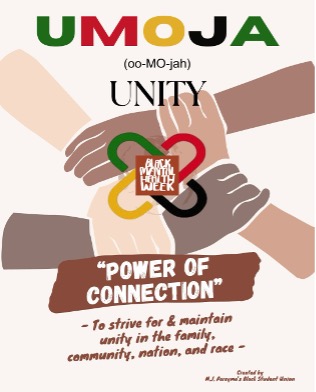
The week of March 2 to 8, 2026, is recognized as Black Mental Health Week by communities across Ontario. During this week we are called to recognize the ongoing impact on mental health that results from experiences of anti-Black racism. It is also a week to raise awareness of the specific mental health needs of Black communities across Ontario. This year’s theme, The Power of Connection-Ancestral Wisdom in a Digital Age, uses the principles of Kwanzaa to explore connection. 

DCDSB students from all secondary schools’ Black Student Unions have created posters in order to examine the Seven Principles of Kwanzaa and explore how connection can support our communities and build our mental health and well-being.

Visit our Black Mental Health Day webpage to browse all the posters.

student bmh day poster

Next Steps

  • Deliver board-wide mental health promotion through BWell and Talking About Mental Illness (TAMI) student leadership summits to ensure students know how and where to access support when needed.
  • Build educator capacity to deliver mandatory Mental Health curriculum through professional learning for Grades 6-8 and Grade 10 Careers educators, with an emphasis on student help-seeking pathways.
  • Strengthen staff capacity to create mentally healthy classrooms through monthly podcasts focused on mentally healthy schools and responsive practices. 
  • Promote student mental health awareness and help-seeking through system-wide DCDSB Let’s Talk Day initiatives, including the 2025 theme “Building Your Hive”. 
  • Enhance instructional practice through professional learning for Program Support Teachers on high-impact instructional strategies, Universal Design for Learning (UDL), and EQAO preparation.

Advancing Human Rights & Equity

Goal: Improve graduation rates and preparedness for future success

On Wednesday, May 27, 2026, 600 Grade 7 students and educators celebrated gathered at King Street Community Church for the final session of the Virtual Engagement Series, Created in the Image of God: I Am because We Are (Ubuntu).

Classes participated in the engagement series with Tanika "iNsight Riley" featuring guest speaker Matthew Jones "Testament". Each session covered topics from "SELF-Awareness – Who Am I?", to "SELF-Regulation – How Do I Feel?", to "SELF-Love – Words Have Power". 

Throughout the engagement series, students have courageously reflected, grown, and discovered the strength of their voices. 

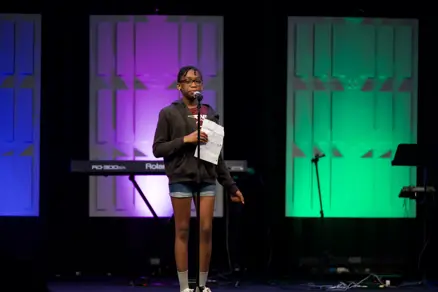
At the special in-person Sharing Circle, students expressed their learning through poetry, song, dance, and art, celebrating identity, faith, belonging, and the truth that we are beloved children of God, stronger together.

We are so proud of the leadership, vulnerability, and creativity shown by our students, and grateful to our dedicated educators who supported meaningful conversations and reflection throughout this journey.

May the confidence, connection, and sense of belonging nurtured in this series continue to grow in our schools and communities. 

ubuntu

The Durham Catholic District School Board is committed to creating caring, inclusive, and safe environments where every student and staff member can thrive. Through its Human Rights and Equity (HRE) learning series, the Board provides professional development guided by the Ontario Human Rights Code and Inspire 2026 strategic plan. These sessions build capacity to identify and address racism and discrimination, strengthen complaint resolution practices, and foster partnerships that promote dignity and respect for all.

Training is offered to staff across all roles - administrators, corporate services, academic teams, and operations - through interactive workshops, keynote presentations, and case-based learning. Topics include bias awareness, culturally responsive leadership, gender identity and disability rights, anti-Black racism, and fair investigation practices. With strong participation and measurable impact, these initiatives are continuously refined to meet evolving needs, ensuring equity and inclusion remain embedded in everyday practice across schools and departments.

Resources to support staff professional development and embedding the principles of equity into the classroom are available for all DCDSB staff on the intranet.

We encourage everyone to participate, learn, and engage in meaningful conversations during Black History Month and throughout the year. By working together, we can promote understanding, respect, and equality for all.

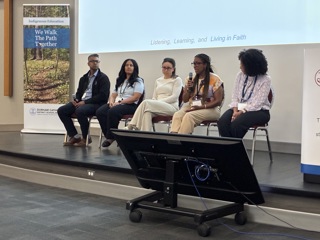
We were proud to launch InspireRise, our new professional learning network designed to support and uplift teachers who identify as racialized or Indigenous, with a highly successful inaugural session on April 15, 2026. The session brought together over 30 participants, including five colleagues from external school boards, reflecting strong interest in this work across systems.

Participants had the opportunity to learn from Siobhan Wright and Dr. Joel Chiutsi, Superintendents from York Catholic District Board, who generously shared their learning and insights on Equity-Seeking and Racialized Leadership. Their reflections sparked meaningful dialogue about leadership identity, representation, and the conditions that support equitable pathways into leadership.

InspireRise is intentionally designed to build community, strengthen leadership capacity, and cultivate future leadership pathways within our board. This inaugural session marked the first of three in-person learning experiences this year, paired with a job shadowing opportunity to deepen real‑world understanding of leadership roles.

inspirerise

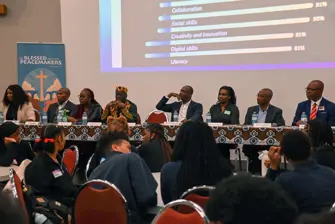
This fall, the Durham Catholic District School Board proudly partnered with Intergenerational Hub and e-Camp Mentoring to host two full-day Career Panels for Black-identifying students, and both events were an incredible success. Over 180 students came together to explore career opportunities, hear inspiring stories of Black excellence from community mentors and professionals, and experience a day filled with culture, connection, and self-discovery.

Students enjoyed an unforgettable lunch prepared by a local Black-owned business and felt the collective energy of a 100-person drum circle. They were immersed in traditional storytelling from Nigerian and Jamaican cultures, creating a vibrant celebration of heritage and identity. These panels were more than career exploration – they were a powerful affirmation of the beauty and diversity of Black culture and a reminder of the strength found in community. We thank every student who chose to attend and contribute to this inspiring day. Your voices, curiosity, and engagement made these events a true celebration of Black excellence. Together, we continue to build spaces that honour identity, foster resilience, and empower future leaders.

career panel

Next Steps

  • Enhance staff capacity to recognize, respond to, and dismantle systemic discrimination through targeted professional learning, to support more inclusive and affirming learning environments.
  • Deepen cross-departmental collaboration to build staff capacity in addressing discrimination across multiple and intersecting grounds, ensuring a coordinated, system-wide approach to advancing human rights and equity.
  • Strengthen and embed student voice as a critical driver in interrupting discrimination by expanding opportunities for student leadership, consultation, and co-creation of strategies that promote dignity, belonging, and equitable school experiences.
  • Continue the implementation of culturally responsive and relevant practices, including the development of culturally responsive school leaders who promote inclusive, affirming, and identity-safe learning environments.

Indigenous Education

DCDSB Goal: Indigenous Student Success, Truth & Reconciliation and Cultural Teaching & Learning

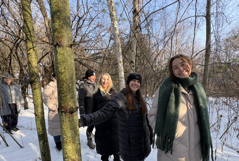
On January 7-8, 2026, the DCDSB Indigenous Education team facilitated two days of professional learning centred on bringing the Land Acknowledgement to life. Educators engaged in reflection, Land‑based activities, and relationship‑building practices designed to deepen their connection to the Land and their understanding of the First Peoples, place, positionality, responsibilities carried within the Acknowledgement.
The learning emphasized that a Land Acknowledgement is not a scripted statement, but a living, relational practice; one that guides us forward in truth, reconciliation, and authentic connection with the Land and community.

land acknowledgement

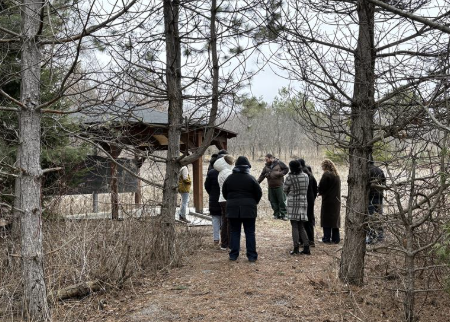
On April 1 and April 2, every intermediate division across all DCDSB elementary schools were represented at the second year of Building You Bundle professional learning sessions, with one or two educators attending from each school. Throughout the two days, participants listened to Indigenous histories shared through local perspectives, including First Nation and Métis voices. These stories were grounded in place, community, and lived experience, offering understandings that can only come from those who carry the knowledge forward. Very grateful for all the participants over the two days!

group outdoors

Land Learning at Holy Family Catholic School

Educators and students from Holy Family Catholic School in Beaverton are partnering with the Indigenous Education Team and community partners to engage in Land Learning over the coming months. Students from Kindergarten to Grade 8 were introduced to the Land surrounding their school, invited to ask questions, observe deeply, and begin forming connections with the beings and elements they share space with.

This learning is helping students build a stronger understanding of how meaningful, relational actions can be woven into their daily Land Acknowledgement. Students are getting to know the place of their school and the kin with whom they are in a relationship.


Students at Holy Family Catholic School Continue Their Land Learning Journey

On March 23, students in Grades 5-8 at Holy Family Catholic School in Beaverton continued their learning journey of connecting with Land through an ongoing seasonal mini-Land Learning series. Guided by community partner, Beedahbin Peltier, students and educators engaged with the Land as Teacher, deepening their understanding of how knowledge, relationships, and teachings emerge through observing and returning to the Land across different seasons. This experience supported meaningful reflection on responsibility, respect, and reciprocal learning with the natural world.


Storyteller Robert Cutting Visits Kindergarten Classrooms

On Monday, March 30, kindergarten students at Monsignor Philip Coffey Catholic School had the special opportunity to welcome storyteller Robert Cutting into their classrooms for an engaging and meaningful visit centered on storytelling, music, and listening to the world around us.

During his visit, Robert shared his story Coyote’s Trick, using it as a way to talk with students about the importance of forgiveness. The students listened closely as they explored how characters learn from their choices and how forgiving others helps build understanding and kindness.

Robert also read Bear Listens, guiding students in a thoughtful discussion about listening to nature and paying attention to what nature is trying to tell us. He encouraged students to slow down, notice sounds, and appreciate the messages found in the world around them.

In addition to storytelling, Robert introduced students to several musical elements. He shared a traditional whistle, demonstrating how it can create different sounds, and then played his flute, captivating students with its gentle tones. He even made bird call sounds, delighting the children and connecting the music to nature.

To close the visit, Robert taught the students the word “Kwey,” meaning hello, and shared a song that everyone could sing together. The experience was interactive, joyful, and memorable, leaving students inspired through stories, music, and meaningful lessons.

We are grateful to Robert Cutting for sharing his knowledge and stories with our kindergarten students.


Indigenous Artist Vicky Rozentals Inspires Grade 7 and 8 Students Through Story and Art

Victoria (Grant) Rozentals, also known as Vicky the Real Artist, visited Ms. Matti’s Grade 7 and 8 class at All Saints Catholic School to share her powerful story of identity and her journey as an Indigenous artist. Vicky is an Anishinaabe, Mi’kmaq, and Métis artist living and creating in Durham Region. She honours both her Indigenous and her French and Scottish ancestry, and is known for her distinctive work in pyrography, the art of wood burning.

During her visit, students learned foundational wood‑burning techniques and created their own designs under Vicky’s guidance. She shared stories from her life, her cultural teachings, and her evolving art practice, sparking meaningful conversations about identity, community, and the role of art in carrying teachings forward.

Students were deeply inspired by Vicky’s artistry, humour, and encouragement, and her visit continues to influence their creative work in the classroom. We are grateful for the opportunity to learn from an artist whose work honours tradition while embracing contemporary expression. Learn more about Vicky here.


St. Mary Catholic Secondary School Welcomes Indigenous Speaker Noreen Labelle

St. Mary Catholic Secondary School students in Ms. Prebble’s First Nations, Métis and Inuit Voices (NBE) course welcomed Noreen Labelle into their classes. Students had the opportunity hear her powerful story of resilience, courage, and reconnection to identity. A survivor of the Sixties Scoop, Noreen shared her experiences navigating foster care, adoption, and the long and often difficult journey back to her roots. Her honesty and warmth created a space where students could listen deeply, not only to her story, but to the teachings within it.

What resonated most with students was Noreen’s message of hope. Noreen also emphasized the lifelong process of reconnecting to identity. She shared how identity can be disrupted, hidden, or taken, but never erased. She spoke to the strength that comes from reclaiming who you are, honouring your story, and embracing the teachings passed down through community and culture. Her words reminded students that identity is something to nurture and protect, and that every person has a right to know where they come from and who they are becoming.

Throughout the visit, Noreen highlighted the kindness, attentiveness, and genuine care she saw in the students. She encouraged them to recognize this goodness within themselves and to harness it in their own lives, whether through compassion, curiosity, advocacy, or simply by showing up for others. She reminded them that their gifts matter, and that the small acts of empathy they offer each day can have a real impact.


Sheepa Papatsi Visits Father Leo J. Austin Catholic Secondary School

On Tuesday, February 24, Indigenous community partner, Sheepa Papatsi, visited Mr. Gorman’s Contemporary Indigenous Issues and Perspectives in a Global Context (NDW) class at Father Leo Leo J. Austin Catholic Secondary School. Sheepa shared a wealth of knowledge about her home, Baffin Island, in Nunavut. She spoke about the Land, cultural stories, and traditional foods, offering students a firsthand look into Inuit life.Students were especially surprised to learn about the seasonal extremes in her community, where there can be 24 hours of darkness in winter and 24 hours of daylight in summer. Sheepa also brought a collection of Inuit art, jewelry, clothing, and cultural items—including the ulu, a traditional knife used by Inuit women for thousands of years. Her visit provided students with a rich and authentic learning experience rooted in Inuit knowledge and lived experience.

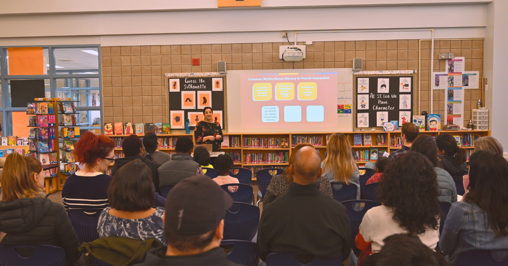
Cultural Days for Grades 3–5 are designed for students who have self-identified as First Nations, Métis, or Inuit to participate in cultural learning supported by our Indigenous Education Team and community partners. This year, students learned about Inuit culture and sealskin art with community partner Sheepa Papatsie, explored drumming with storyteller Robert Cutting, engaged with Anishinaabemowin alongside K–12 Indigenous Education Consultants Tara and Leah, and discovered plants and their “superpowers” with Indigenous Student Engagement Facilitator Mikayla and Resource Teacher Julia.

Next Steps

  • Open an Indigenous Education Learning Centre and outdoor classroom, located near the Pope Francis Centre, to provide Indigenous-centered and culturally responsive land-based learning opportunities for staff and students.
  • Provide job-embedded coaching and professional development to educators on Treaties.
  • Facilitate and build capacity for nurturing cultural safety while implementing curriculum expectations related to Indigenous Education.
  • Provide ongoing professional learning with a focus First Nation, Métis, and Inuit excellence and innovation.
  • Develop an Indigenous Student Success Strategy that will outline needs and goals specific to improving student achievement and well-being for First Nation, Métis, and Inuit learners in DCDSB schools.