The majority of the operating budget, nearly 87%, is spent on staffing costs through salaries, benefits and staff development. Most of these salaries are based on Ministry of Education legislated class size formulas and contract agreements. The rest is spent on resources and supplies, student transportation, school operations and maintenance, administration and other costs. Over 97.2% of the board's budget directly supports students. There is little flexible funding available to resource board initiatives.
2026-2027 Budget Development and Consultation
School and board planning for the 2026-2027 school year is underway and we want to hear from you! We invite parents/guardians, students, staff and community members to provide input into the budget development process.
2026-2027 DCDSB Budget Consultation
Please take a few minutes to share your feedback by completing an anonymous survey. The information gathered will be used to inform our school and board budget for the 2026-2027 school year. Please email any questions or concerns about the survey to finance@dcdsb.ca.
Click here to complete the 2026-2027 Budget Consultation Survey
The survey is open until 4:30 p.m. on Tuesday, March 31, 2026.
Background Information
Over recent years, the education sector has faced significant challenges and funding pressures. Throughout this period, the Durham Catholic District School Board (DCDSB) has worked to maintain a balanced budget aligned with the Inspire 2026 multi‑year plan and Ministry of Education directives, while rebuilding its operating accumulated surplus.
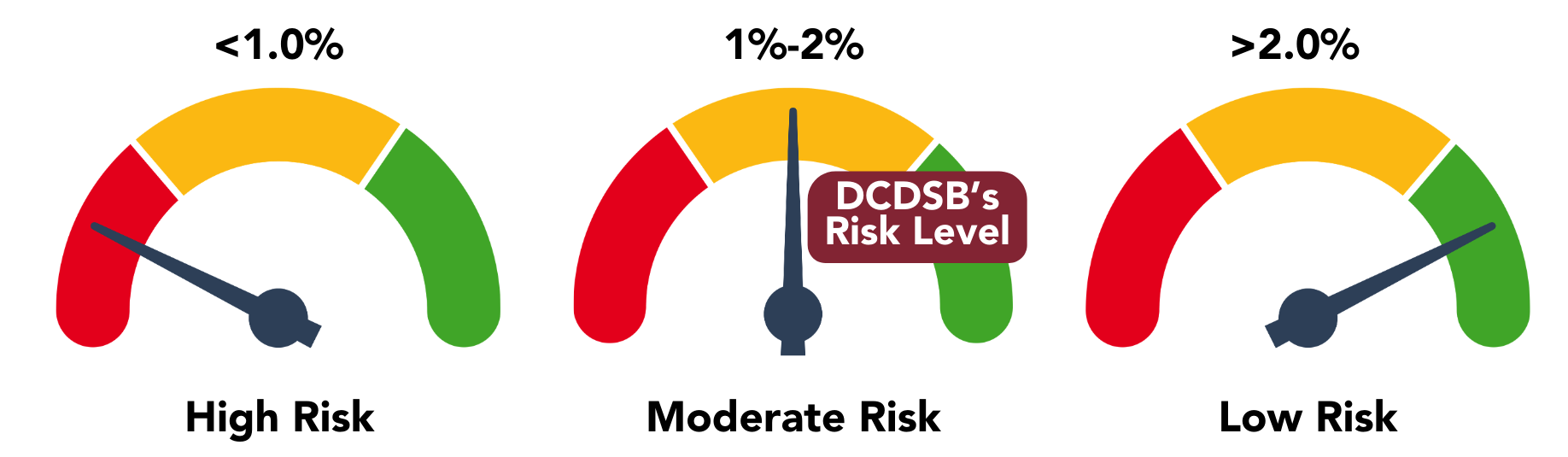
The Ministry of Education regularly reviews the financial health of all school boards, and a key part of this assessment is the size of each board’s operating accumulated surplus (operating reserves). Boards are considered low risk when their reserve is at least two percent of their annual ministry operating allocation, which for DCDSB is approximately $6.2 million.
At the end of the 2024-2025 fiscal year, DCDSB reported an operating accumulated surplus of $3.4 million, placing the Board in the medium risk category. In the years leading up to 2024-2025, the Board had been rated high risk after utilizing its operating reserves to address Covid‑19 related needs. To strengthen its financial position, the Board has launched a three year recovery plan aimed at returning to low risk status by 2028.
To remain financially sustainable, the Board must continue to allocate resources carefully. Your input is essential in helping us identify priority areas that support the evolving needs of our Durham Catholic learning community while ensuring fiscal responsibility.
Three Year Operating Accumulated Surplus Recovery Plan
| Amount | Percent of Operating Allocation | |
| Accumulated Surplus, 2024-2025 Audited Financial Statements | $3,414,291 | 1.09% |
| 2025-2026 Budgeted contributions to operating accumulated surplus | $1,113,795 | |
| Subtotal | $4,528,086 | 1.45% |
| 2026-2027 - Estimated contribution to operating accumulated surplus | $1,113,795 | 1.80% |
| 2027-2028 - Estimated contribution to operating accumulated surplus | $1,113,795 | |
| Total | $6,755,676 | 2.16% |
How the DCDSB is Funded
The DCDSB’s main funding source is through Core Education Funding grants from the province of Ontario. Mandated class sizes and staff ratios restrict the majority of this funding, while other areas are governed through specific funding envelopes whereby prescribed funds can only be spent on their intended purpose. The main areas where funding is restricted to specific use include: special education, student mental health, Indigenous education, temporary accommodations and capital funding.
In addition to these regulatory constraints, the board faces challenges in the following areas:
- Inflationary pressures: Ministry funding has not kept up with inflation. Funding benchmarks for textbooks, learning materials and classroom supplies has increased by 2.3% since 2019 whereas inflation has increased by over 20%.
- Statutory Benefit Increases (e.g. CPP and EI): Canada Pension Plan (CPP) and Employment Insurance (EI) are mandatory employer paid premiums that are federally regulated. These premiums have increased substantially over the past several years, but the increases remain unfunded by the province.
- Special Education: Current funding levels remain insufficient to meet the full scope of special education needs across the Board.
- Supply costs (replacement staff for sick leave): Costs continue to outpace funding. The gap between funding and actual costs is approximately $5M/year for DCDSB.
- Temporary Accommodation: Funding from the ministry for temporary accommodation (e.g. portable purchase and moves) has been capped provincially for years. Funding continues to fall behind market realities.
Learn more about how school boards receive funding by visiting the Ministry Website. Details on the DCDSB's prior year's budget and financial statements can be found on our website under Annual Budget and Priorities Reports.
2026-2027 Budget Development and Timelines
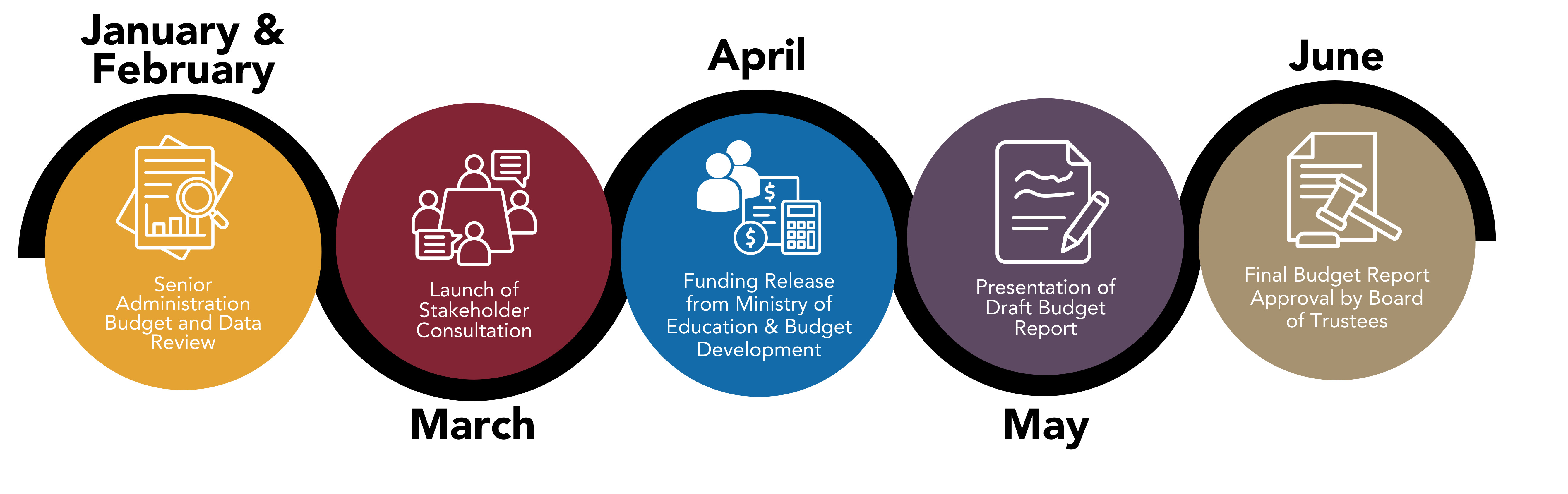
The 2026-2027 budget process and timelines are summarized below, and details will continue to be added to this webpage as information becomes available.
Key Dates:
The following list outlines the key dates in the budget process:
- January - March 2026: Senior Administration Budget and Data Review
- March 2, 2026: Finance Committee Meeting to Review Current Financials, Budget Process and Timelines
- March 3, 2026: Launch of Stakeholder Consultation (Survey Open March 3 - March 31, 2026)
- April - May 2026:
- Funding Release from Ministry of Education
- Internal Budget Strategy Sessions
- Budget Development
- April 13, 2026: Finance Committee Meeting to Review Budget Consultation Results, Grant Announcements and Priorities
- May 19, 2026: Finance Committee Meeting: Presentation of the Draft Budget Report
- June 8, 2026: Finance Committee Meeting: Final Budget Report for Recommendation to the Board of Trustees
- June 15, 2026: 2026-2027 Final Budget Report to Board of Trustees for Approval at Regular Board Meeting
- June 30, 2026: Budget Filed with the Ministry of Education
Frequently Asked Questions
Below are the answers to some commonly asked questions about the budget process.
Does the budget have to be balanced, or can a school board run a deficit?
We are required to prepare a balanced budget. However, a school board is allowed to run a 1% deficit (of operating grants provided from the Ministry of Education) if it has surplus available to cover it.
The Durham Catholic District School Board has a balanced budget, is adding to the surplus, and aims to rebuild reserves according to our three-year recovery plan (see details above).
How do you determine where to spend money?
Our decisions are guided by a few key factors:
- Commitment to a balanced budget and rebuilding the operating reserve
- Budget alignment with our strategic plan
- Multi-year budget framework (commitments, multi-year programs)
- Obligations of all collective agreements, board policies and contracts
- Ministry legislation, regulations, policies and priorities
Is there a lot of flexibility to make changes to the budget?
No. The majority of the budget is committed, which means that the Ontario government dictates how it can be spent. There are legislated class size requirements that must be met, salary and benefit levels set through provincial labour negotiations to be maintained and restricted funding streams such as special education and Indigenous education that are enveloped for specific programs.
There is little funding available to spend on areas recommended by the Board.
What period of time does the budget cover?
The budget covers a fiscal year from September 1 until August 31.
When does the budget need to be finalized?
The Board of Trustees needs to approve the final budget by the end of June each year.
How can I share my suggestions or concerns about the budget?
We encourage you to share feedback by completing an anonymous survey. The information gathered will be used to inform our school and board annual plans and budget for the 2026-2027 school year. The survey will close at 4:30 p.m. on Monday, March 31, 2026.
Please email any questions or concerns about the survey to finance@dcdsb.ca.
In the 2025-2026 school year, the DCDSB has:
- 45 schools
- 3 adult and continuing education centres
- 23,708 students
- 2,438 staff
- $331.8 million operating budget
- $93.1 million capital budget